

Místico Calls for the Protection of Sea Turtle Nesting at Playa Hermosa During the 2026 Season
Key points of this release
The olive ridley turtle (Lepidochelys olivacea), the most abundant sea turtle species on Costa Rica’s Pacific coast, nests at Playa Hermosa between July and October.
Playa Hermosa is part of the Playa Hermosa–Punta Mala National Wildlife Refuge, one of the most important nesting sites on Costa Rica’s Central Pacific.
Místico invites residents, visitors and beach-goers to join the conservation efforts led by SINAC and the environmental organizations working in the area.
Playa Hermosa, Puntarenas, July 2026. — Over the coming months, Playa Hermosa will once again be the stage for one of the most extraordinary natural processes of Costa Rica’s Central Pacific: the arrival of sea turtles to nest along its shores.
As this season begins, Místico Beach Community & Resort makes an urgent call to the local community, visitors and beach-goers to support the conservation efforts led by the National System of Conservation Areas (SINAC), the Playa Hermosa–Punta Mala National Wildlife Refuge, and the various organizations working to protect these species.
The olive ridley turtle (Lepidochelys olivacea) —the most abundant sea turtle species in Costa Rican waters— returns each year to Playa Hermosa to lay its eggs. This beach is part of a protected area recognized for its importance to sea turtle nesting during these months; it is a recurrent nesting site for this species, which is why it forms part of the protected area managed by the Playa Hermosa–Punta Mala National Wildlife Refuge. Unlike mass-arrival (“arribada”) beaches such as Playa Ostional in Guanacaste, solitary-nesting beaches like Playa Hermosa show higher hatching success rates, making them priority areas for conservation.
Each female lays between 80 and 120 eggs per nest, with an incubation period of 45 to 50 days depending on sand temperature. Sea turtles return to nest on the same beach where they were born, a behavior that makes them especially vulnerable to human disturbance in coastal areas.
July–October — Nesting season at Playa Hermosa
80–120 — Eggs per nest laid by each female
45–50 — Days of incubation depending on sand temperature
“More than a conservation project, Místico is a community committed to protecting the natural environment and the future of sea turtles. As a community, we seek to reduce our impact, protect the nests, and ensure that future generations can keep watching these incredible ocean travelers arrive.” — Vanessa Lizano, Director of the Místico Rescue Center
How can we protect the nesting season?
Sea turtles are keystone species in Costa Rica’s coastal and ocean ecosystems: they help balance coral reefs, seagrass beds and jellyfish populations. However, the olive ridley, green, leatherback and hawksbill turtles —all present in Costa Rican waters— face threats from climate change, marine pollution and bycatch.
During the nesting season, seemingly minor factors can have serious consequences for the species’ reproductive success. Místico therefore joins the conservation call and invites the community, residents and tourists at Playa Hermosa to adopt these measures during the 2026 sea turtle nesting season:
Avoid white flashlights or bright lights on the beach at night. Use only amber or red light to reduce the risk of disorienting turtles and hatchlings.
Keep pets out of the nesting zone and always under direct supervision throughout the season.
Do not approach or interfere with turtles during nesting or laying. Keep at least 10 meters away and never block their path to or from the water.
Respect marked nests and follow the instructions of SINAC, the Playa Hermosa–Punta Mala National Wildlife Refuge and the conservation organizations present.
Park vehicles only in designated areas, away from the sand. Driving on the beach can crush nests that are invisible to the naked eye.
Never touch or handle turtle eggs, nests or animals under any circumstances.
Remove chairs, tables, tents and any objects from the beach at the end of the day so they don’t block the path of turtles or hatchlings.
Every responsible action at Playa Hermosa contributes directly to the survival of the species.
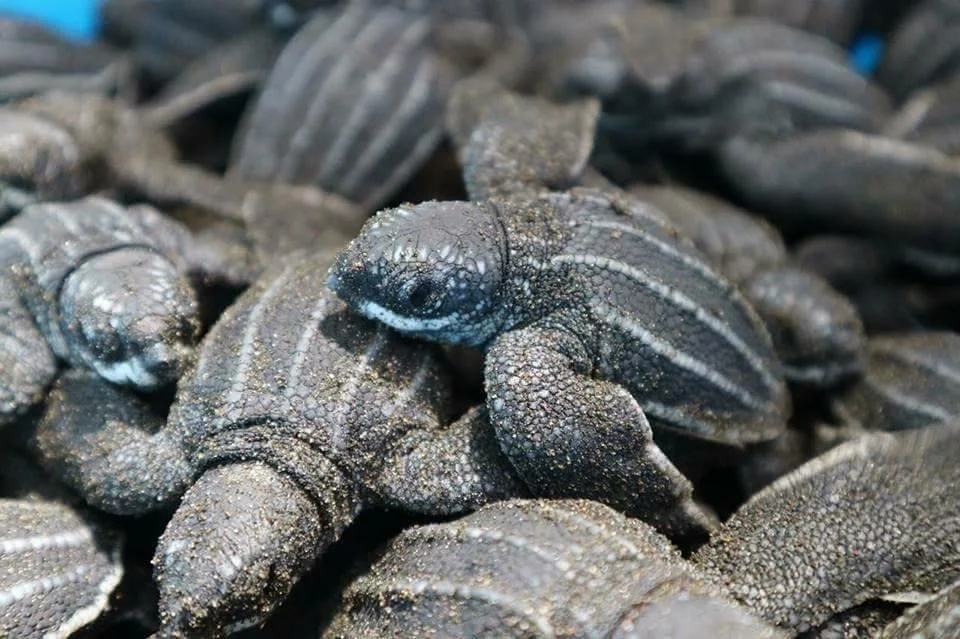
Every hatchling that reaches the sea counts toward the survival of the species.
“The nesting season is an opportunity to remember that sea turtle conservation is a shared responsibility. Small actions —respecting protected areas, avoiding pollution and keeping a proper distance from the turtles— can have a significant impact on protecting these species. At Místico, we want to foster a culture of respect for nature and encourage visitors and the community to become active allies in conservation and protection at Playa Hermosa.” — Carlos Quesada, Director of Místico
As part of its responsible-development vision, Místico makes marine biodiversity conservation a central pillar of its land management, with environmental education, coastal monitoring and responsible-coexistence protocols for staff, residents and visitors.
The goal is for Playa Hermosa to remain a safe refuge for the olive ridley and other protected marine species in Costa Rica, year after year.
Reconnect with what matters.