

The Ultimate Guide to Purchasing Property in Costa Rica
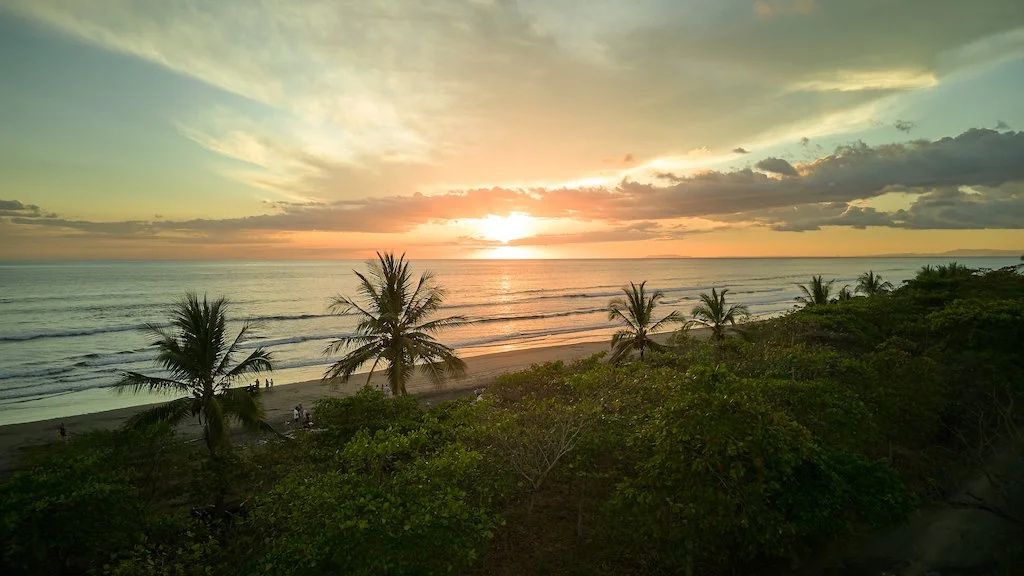
Playa Hermosa Central Pacific at sunset—one of the many reasons buyers are drawn to purchasing property in Costa Rica.
Costa Rica has become one of the most attractive places in the world to purchase vacation homes, investment property, or retirement real estate. With its political stability, strong property rights, and breathtaking coastlines, it’s easy to see why buyers from Canada, North America and Europe continue to invest here.
But purchasing property in Costa Rica is not exactly the same as buying real estate in the United States or Canada. Understanding the legal structure, property types, and buying process can help you make a confident and informed decision.
This guide explains everything you need to know—from how foreigners can buy property in Costa Rica to the difference between titled land and Maritime Zone concessions, the legal process of ownership, and what to expect when purchasing property in a master-planned community like Místico.
Can Foreigners Buy Property in Costa Rica?
Yes. Foreigners have the same property ownership rights as Costa Rican citizens.
You do not need residency or citizenship to buy property in Costa Rica. In fact, many buyers complete purchases using only a passport and a Costa Rican attorney or escrow service.
Foreign buyers can:
Purchase property in their own name
Hold property through a Costa Rican corporation
Own land, homes, or condominiums
Sell property freely at any time
This open ownership structure is one of the reasons Costa Rica has become such a popular destination for international real estate investment.
While many buyers purchase property with cash, financing options are available, including local bank loans and developer or private financing in some cases. If you're exploring how this works, read our guide to Financing Your Dream Home in Costa Rica.
Understanding Titled Property vs. Maritime Zone Concessions
One of the most important things to understand when purchasing property in Costa Rica—especially near the beach—is the difference between Titled Property and Maritime Zone Concession Land.
The Maritime Zone Explained
Costa Rica’s coastline is protected under a law called the Maritime Zone (Zona Marítimo Terrestre).
The first 200 meters inland from the high tide line is regulated differently from normal titled land.
This zone is divided into two sections:
Public Zone (first 50 meters)
This land is public and cannot be owned or developed.
Restricted Zone (next 150 meters)
This land can be developed but is held through a government concession rather than traditional ownership.
A concession functions similarly to a long-term lease granted by the municipality, typically for 20 years with renewal options.
Foreigners without residency generally cannot own more than 49% of concession property, which is why buyers should always understand exactly what type of land they are purchasing.
Why Titled Property Matters
Titled property sits outside the Maritime Zone and provides full ownership rights registered in Costa Rica’s National Registry.
When purchasing titled land, buyers receive:
Full legal ownership
The ability to sell or transfer the property freely
Inheritance rights
Public registration verifying ownership
At Místico, properties are fully titled and located outside the Maritime Concession Zone, providing buyers with the security of direct ownership rather than a government concession.
For international buyers unfamiliar with Costa Rica’s coastal property laws, this distinction offers important peace of mind when investing in beachfront or ocean-view real estate.
What Buyers Actually Own Legally
When purchasing titled property, buyers receive full ownership registered in the Costa Rican National Registry.
This means:
You hold legal title to the property
The property can be sold, inherited, or transferred
The ownership is publicly recorded
The title can be verified by any attorney
Costa Rica’s National Registry system allows attorneys to confirm:
Ownership history
Existing liens or mortgages
Property boundaries
Legal restrictions
This centralized system helps protect buyers and is one of the reasons Costa Rica is considered one of the safest real estate markets in Latin America.
The Buying Process: Step-By-Step
Purchasing property in Costa Rica is straightforward when you work with qualified professionals.
Here’s how the typical process works.
1. Choose Your Property
Buyers usually begin by researching regions, communities, and property types. Many choose master-planned developments because infrastructure, roads, and utilities are already established.
2. Hire an Independent Attorney
Unlike some countries, real estate transactions in Costa Rica are handled by attorneys who also act as notaries.
Your attorney will conduct the legal due diligence and ensure the property is properly registered.
3. Make an Offer
Once you decide on a property, your attorney prepares a purchase agreement outlining price, deposit terms, closing date, and contingencies.
4. Deposit Funds into Escrow
A deposit is typically placed into a neutral escrow account while due diligence is conducted.
5. Conduct Due Diligence
The attorney verifies:
Title ownership
Property boundaries
Municipal zoning
Utility access
Any liens or debts attached to the property
6. Closing and Registration
Once all conditions are satisfied, the transaction is finalized and the new ownership is registered in the National Registry.
From start to finish, the process often takes 30–60 days.
Why Many Buyers Choose Master-Planned Communities
While some buyers choose undeveloped land, many international buyers prefer master-planned communities where infrastructure, services, and long-term development planning are already in place.
These communities are designed to provide both convenience and stability for property owners.
Typical benefits include:
Paved internal roads
Underground utilities
Managed landscaping
Security and controlled access
Established architectural guidelines
Maintained common spaces and amenities
For buyers who plan to live abroad part-time, this structure can be particularly valuable because the community continues to be maintained year-round.
At Místico, the master-planned community concept is designed to integrate residential living with the surrounding natural environment.
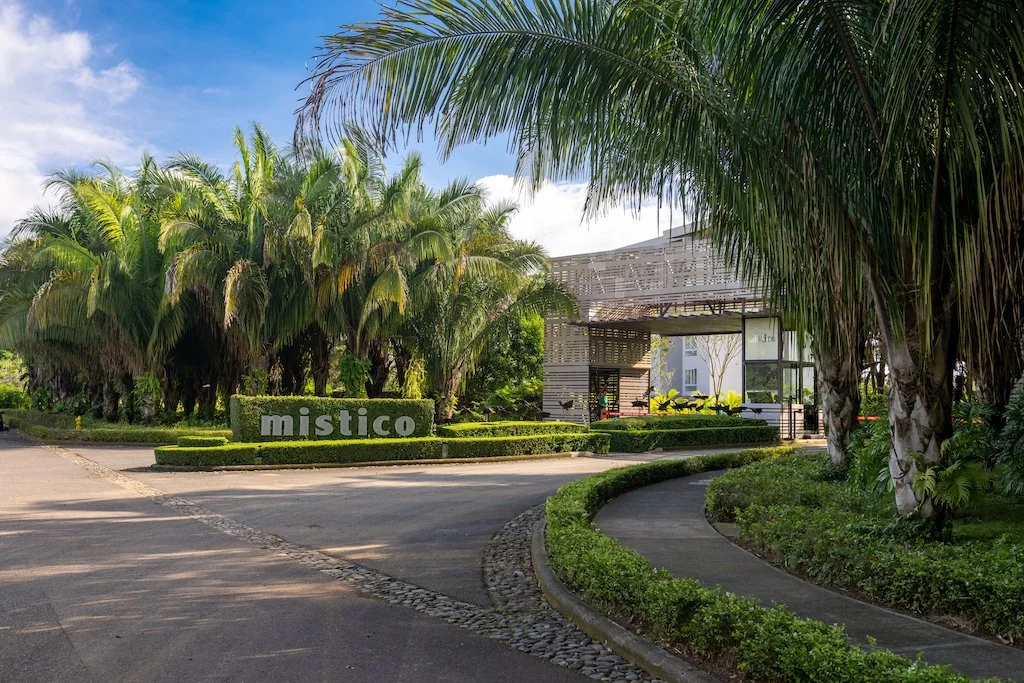
The entrance to Místico, where international buyers come to buy property in Costa Rica within a thoughtfully planned coastal community.
For many international buyers purchasing property in Costa Rica for the first time, a master-planned community offers a balance between nature, convenience, and long-term investment stability.
How the HOA Works in Communities Like Místico
Most planned communities operate under a Homeowners Association (HOA) that manages shared spaces and community services.
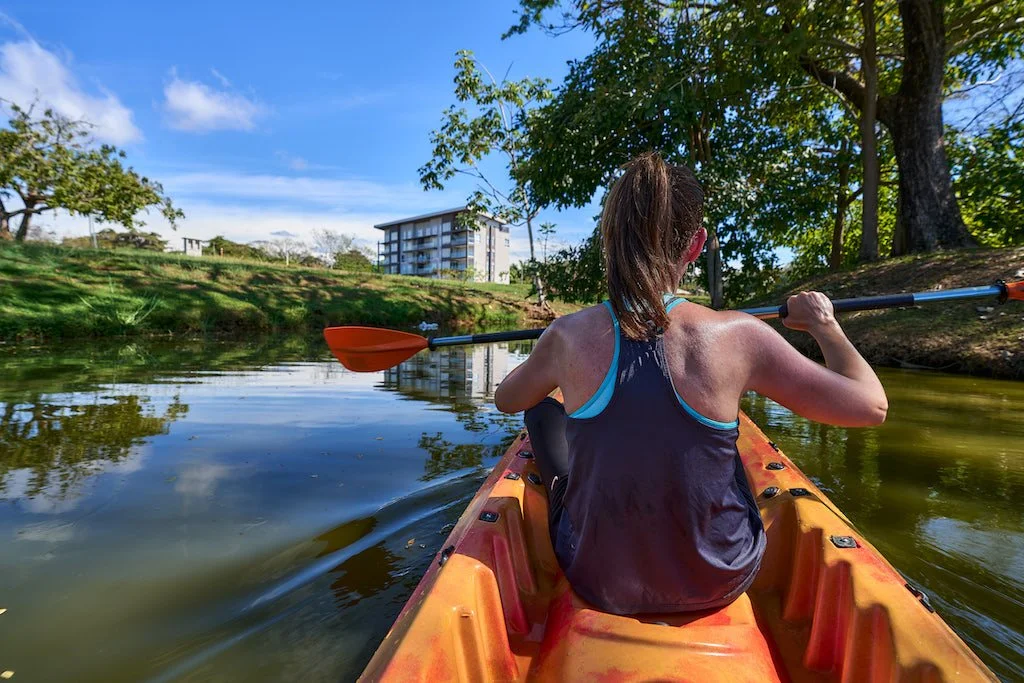
Community amenities like lakes and outdoor recreation are part of daily life at Místico, illustrating why many buyers purchasing property in Costa Rica prefer established developments.
The HOA is responsible for maintaining:
Roads and infrastructure
Landscaping and common areas
Security and access points
Shared amenities
Community rules and standards
HOA fees vary depending on the size of the property and services provided. These fees typically contribute to maintaining the long-term quality and value of the community.
For buyers who live abroad or visit seasonally, an HOA can be particularly helpful since the community continues to be maintained year-round.
What Fees and Closing Costs Look Like
Compared to many countries, Costa Rica has relatively modest closing costs.
Typical buyer costs include:
Property transfer tax
National Registry fees
Notary fees
Legal fees
Combined, these costs typically range between 2% and 4% of the purchase price.
Annual property taxes are also relatively low, generally around 0.25% of the registered property value.
The Importance of Independent Legal Advice
One of the most important steps when purchasing property in Costa Rica is working with a qualified, independent attorney.
Even when purchasing property within a development, buyers should have their own legal representation to review contracts and confirm property registration.
A good attorney will:
Verify title ownership
Confirm zoning and land use
Review HOA rules
Ensure contracts are clear and enforceable
Guide you through closing
This independent oversight helps protect buyers and ensures the process is transparent.
Residency Options for Property Owners
Some buyers also pursue residency in Costa Rica.
One option is the Investor Residency Program, which allows foreign nationals to apply for residency when they invest a qualifying amount in Costa Rican assets, including real estate.
This pathway can be attractive for buyers who plan to spend extended time in the country or eventually relocate.
Why Costa Rica Continues to Attract Buyers
Costa Rica has built a global reputation for safety, natural beauty, and stability.
Buyers are drawn by:
A stable democratic government
Strong environmental protections
A welcoming culture
Growing tourism
International accessibility
For many, purchasing property here represents not only an investment, but a lifestyle change.
Discover Property Ownership at Místico
Costa Rica offers one of the most welcoming environments in the world for international property buyers. With strong property rights, transparent title registration, and extraordinary natural beauty, it continues to attract investors, retirees, and vacation home buyers from around the globe.
For those looking to purchase property along Costa Rica’s Pacific coast, Místico offers a unique opportunity to own within a thoughtfully designed coastal community surrounded by nature.
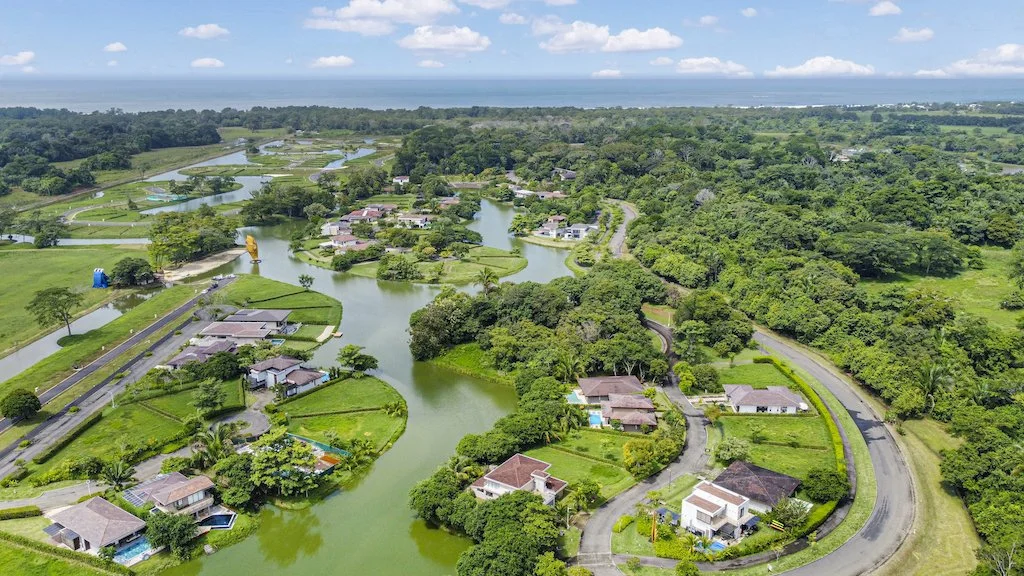
An aerial view of Místico, a thoughtfully planned coastal community where buyers exploring purchasing property in Costa Rica can enjoy ocean views, natural green space, and lakes.
Located beside the protected Playa Hermosa Wildlife Refuge, the community blends ocean views, tropical forest, and preserved green space with the infrastructure of a master-planned development.
Buyers benefit from:
Fully titled property outside the Maritime Zone
Large homesites with ocean and forest views
Established roads and community infrastructure
Proximity to wildlife refuges and protected coastline
A peaceful setting designed for both full-time and seasonal living
For many buyers exploring purchasing property in Costa Rica, communities like Místico provide the confidence of secure ownership along with the lifestyle that draws people to Costa Rica in the first place.